-
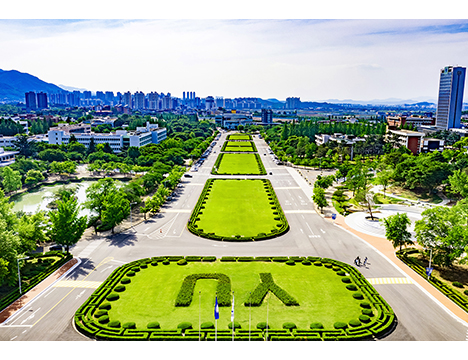
Ministry of Education Announces Prospective Designated Universities for Glocal University 30 on the 16th Leading Regional Innovation through Collaboration between Public and Private Universities in Gyeongbuk Province Specialization in SW (YU) and Semiconductor (Kumoh National Institute of Technology) Fields, Creating a Global Youth Village [April 16, 2024] YU (President CHOI Oe-chool) and Kumoh National Institute of Technology (President KWAK Ho-sang) were selected as prospective designated universities. YU and Kumoh National Institute of Technology are committed to actively collaborating to prepare for the official designation. On the 16th, the Ministry of Education announced the results of the 2024 Glocal University 30 prospective designation, with the joint model of YU and Kumoh National Institute of Technology being recognized as a crucial gateway for project selection. As the only prospective designated university among the joint models of public and private universities, their selection holds significant meaning. YU and Kumoh National Institute of Technology, through their collaboration, have been selected as prospective designated universities based on their innovative project plan for the Glocal University 30 Project, which includes fostering semiconductor and software talent, promoting local advanced industries, supporting research facilities and startups, and creating a global youth village. This selection accelerates the formulation of implementation plans for their official designation. <On the 15th of last month, YU and Kumoh National Institute of Technology signed a business agreement to promote the Glocal University 30 project>. (From the sixth person from the left: President CHOI Oe-chool of YU, President KWAK Ho-sang of Kumoh National Institute of Technology) On the 15th of last month, the two universities signed a business agreement to promote the Glocal University 30 project and agreed to ▲ establish a system to foster local strategic industries ▲ develop an advanced education platform based on AI ▲ operate research and education programs for industry-academia cooperation in high-tech industries ▲ establish and strengthen cooperation networks to create youth jobs ▲ and develop and operate local and global contribution projects. With the selection of the prospective designated universities, the two universities will initiate discussions on regional innovation strategies within this month. President KWAK Ho-sang of Kumoh National Institute of Technology stated, "Our innovation plan is not merely a passive collaboration aimed at project selection, but a shared effort between the two universities to address regional extinction issues and advance globally. It is a collaboration that breaks down the boundaries between public and private universities, sharing and systematizing what both universities have long prepared and pursued together." He added, "I will do my best to be selected as a final candidate for Glocal University 30, to open new horizons for regional industries, and to create a globally recognized university model where young people gather and spread their wings." President CHOI Oe-chool of YU stated, "The selection of our university as a prospective designated university is a recognition of the innovative plan based on collaboration between YU and Kumoh National Institute of Technology, which aligns with the purpose of the Glocal University project. All members of both universities will unite their efforts to formulate concrete implementation plans based on the contents of the Glocal University innovation plan. We are committed to concentrating all the university's capabilities to lead regional innovation and enhance the capabilities of youth by cooperating with local governments and related universities, aiming to be finally selected as a model for regional innovation in this project."
- PR team
- 2024. 04. 24
- 2024. 04. 16
- 559
-
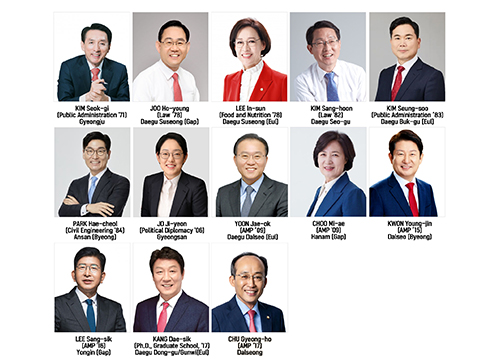
Continued Influence of YU Alumni in the 22nd National Assembly Over Half of Daegu's 12 Seats Occupied by YU alumni 13 Members of Parliament Elected from Daegu/Gyeongbuk, and Gyeonggi Regions [April 12, 2024] <YU Alumni Elected in the 22nd National Assembly Election> The alumni power of YU (President CHOI Oe-chool) was once again confirmed in the 22nd National Assembly elections held on April 10. In this parliamentary election, YU produced 13 members of the National Assembly from districts. In the district elections, there were many elected in the Daegu and Gyeongbuk regions. In Daegu, JOO Ho-young (Law ‘78) won Suseong (Gap), LEE In-sun (Food and Nutrition '78) won Suseong (Eul), KIM Sang-hoon (Law '82) won Seo-gu, KIM Seung-soo (Public Administration ’83) won Buk-gu (Eul), YOON Jae-ok (Graduate School of Business Administration Advanced Management Program ’09, hereinafter called AMP) won Dalseo (Eul), KWON Young-jin (AMP ’15) won Dalseo (Byeong), KANG Dae-sik (Ph.D., Graduate School, '17) won Dong-gu/Gunwi(Eul), and CHU Gyeong-ho (AMP ‘17) won Dalseong. Thus, 8 out of the 12 seats for Daegu were taken by graduates of YU. Two YU alumni won in Gyeongbuk : KIM Seok-gi (Public Administration '71) in Gyeongju and JO Ji-yeon (Political Diplomacy '06) in Gyeongsan, while three YU alumni won in Gyeonggi: PARK Hae-cheol (Civil Engineering '84) in Ansan (Byeong), CHOO Mi-ae (AMP '09) in Hanam (Gap), and LEE Sang-sik (AMP '16) in Yongin (Gap). In particular, Representative KANG Dae-sik in Dong-gu/Gunwi (Eul) achieved a remarkable victory with a vote share of 76.1%, recording the highest percentage in the Daegu region and bringing great joy to his election. In addition, Representative JOO Ho-young in Suseong (Gap) and Representative CHOO Mi-ae in Hanam (Gap) were elected to six consecutive terms, the most among the winners of the 22nd General Election. Meanwhile, Representatives JO Ji-yeon in Gyeongsan, PARK Hae-cheol in Ansan (Byeong), and LEE Sang-sik in Yongin (Gap) were elected for the first time.
- PR team
- 2024. 04. 24
- 2024. 04. 12
- 475
-
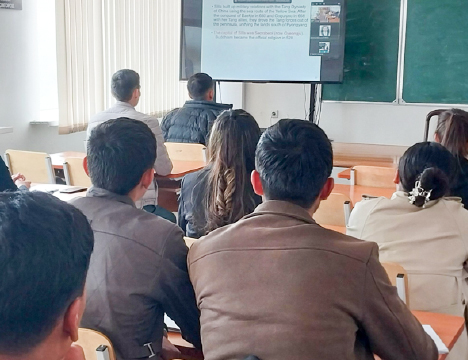
Department of Saemaul Established at Samarkand State University in September 2023 YU Professor Delivers Saemaul Studies Lectures in English Plans to Establish Departments of Saemaul in Cambodia, Uzbekistan, Ethiopia, and Tajikistan [April 17, 2024] <Students from Samarkand State University in Uzbekistan are participating in a live online lecture by a YU professor on the subject of Saemaul Studies> "Hello everyone, I'm Professor LEE Byeong-wan from YU, teaching a course titled 'Understanding Saemaul International Development' this semester. I am thrilled to meet you online and in person." On April 15th at 3:00 p.m. (11:00 a.m. Uzbekistan time), students from Samarkand State University gathered for a live online lecture by Prof. LEE Byeong-wan of YU. Despite a four-hour time difference and a distance of 4,343 kilometers, the online meeting between the Korean professor and the Uzbek university students facilitated an exchange of knowledge. In June of last year, YU (President CHOI Oe-chool) signed an agreement with Uzbekistan's Samarkand State University (President Halmuradov), pledging educational cooperation to disseminate the values of the Saemaul movement and Saemaul development As a follow-up, the Department of Saemaul was established at Samarkand State University in August of last year, with the first 15 students admitted in September. Upon completing two years of education at Samarkand State University, these 15 students will continue their studies at YU for an additional two years, starting in September 2025. Upon completing all undergraduate courses and meeting graduation requirements, they will receive a "double degree," simultaneously obtaining bachelor's degrees from both Samarkand State University and YU. To ensure the success of the cross-border dual degree program, YU established a dedicated English-only department in March of this year and made preparations to welcome students. Furthermore, four graduates from Samarkand State University have been accepted as new students in the master's program at Park Chung Hee School of Policy and Saemaul (PSPS) and are undergoing faculty training. Upon graduation, they will return to Samarkand State University to teach students in the Department of Saemaul Studies and apply the principles of the Saemaul movement in Uzbekistan. Additionally, YU will offer specialized courses taught directly by YU professors from April to June to help students at Samarkand State University understand the Saemaul Movement properly. Among the total of 15 weeks of lectures, half will be conducted in real-time online format, while the remaining half will be delivered through direct instruction on-site by dispatched professors. Regarding these efforts, YU President CHOI Oe-chool stated, "One of the crucial factors for the success of the Saemaul Movement was trust among each other. Trust enables cooperation and allows for concessions and consideration in any endeavor." He further remarked, "While dispatching our university professors to Samarkand State University is not an obligation, providing proper education to students who enrolled to learn about the Saemaul Movement is our responsibility. Through this, I hope our university can demonstrate the mindset and attitude with which we treat students and instill trust in them." Meanwhile, YU has continued its efforts to share Saemaul with universities in developing countries. In September 2021, it established the Department of Saemaul Economics at Western University in Cambodia and introduced the 2+2 dual degree program for the first time. The 22 Cambodian students participating in the program arrived at YU in September of this year and will continue their studies for the remaining two years. Upon successful completion of their two years of undergraduate studies, they will receive bachelor's degrees in Saemaul Studies from both universities. Additionally, President CHOI Oe-chool, serving as an advisor to the governor, is also on the verge of establishing the Department of Sustainable Saemaul Forestry at Werabe University in Amhara, Ethiopia, and the executive team of Werabe University is scheduled to visit YU at the end of May. Furthermore, the Ministry of Agriculture in Tajikistan has requested YU's cooperation for the installation of a Department of Saemaul Studies at local universities, indicating YU's prospects for solidifying its position as a global hub for Saemaul Movement education.
- PR team
- 2024. 04. 24
- 2024. 04. 17
- 614
-
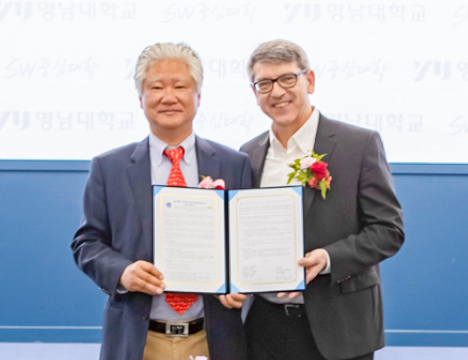
YU's SW-centered university business group signed a business agreement with Valeo SA Plans to cooperate with Valeo SA on customized human resource training projects for industrial companies Opened 'R&D Center' to create 'Campus Venture Town', a core strategy of Glocal University30 [April 18, 2024] <YU has signed a business agreement with Valeo SA for mutual cooperation> YU (President CHOI Oe-chool) has entered into a business agreement for mutual cooperation with Valeo SA, a global company specializing in autonomous vehicle parts. The signing ceremony, held on the morning of the 18th at the LEE Si-won Global Convention Hall of Chunma Art Center, was attended by officials from both institutions, including LEE Gyeong-soo(Director of the Department of Industry-Academic Research) and PARK Yong-wan(Director of the SW-Centered University Business Group) as well as Stiv Smudja(Vice President of Valeo SA CDV (Comfort & Driving Assistance)) and KIM Min-kyu(President of Valeo Mobility Korea). Under this agreement, the both institutions have pledged to collaborate on initiatives such as ▲customized workforce training for industries ▲development and operation of industry-academia cooperation programs ▲strengthening networks for youth employment creation ▲and other projects requiring cooperation between the two institutions. <From left, PARK Yong-wan(Director of the SW-Centered University Business Group), Stiv Smudja(Vice President of Valeo SA CDV)> LEE Gyeong-soo, Director of the Department of Industry-Academic Research, stated in his welcome address, "This is a meaningful occasion to begin nurturing talent in cutting-edge automotive technology with a globally renowned company boasting a 100-year history. It will be a crucial opportunity to establish and complete the value chain of local governments, universities, and corporations leading regional development." PARK Yong-wan, Director of the SW-Centered University Business Group, expressed, "We are delighted to lay the groundwork for cultivating the region's foremost software talent to lead the 4th Industrial Revolution through this collaboration with Valeo SA.” He added, "YU's SW-Centered University Business Group will strive to strengthen software major education and expand software integration to train advanced talents needed by corporations." Valeo SA, founded in 1923 in France, is a global automotive parts company with over 170 manufacturing plants and 60 R&D centers in 29 countries worldwide, recording a global sales revenue of 32 trillion won last year. This collaboration between YU and Valeo is not new. Discussions have been ongoing since last year, involving executives and staff members, focusing on research and development, industry-academia collaboration, and human resource training in the future mobility industry. Educational programs such as electric vehicle-related club meetings and field trips have also been promoted. In particular, this event coincides with the inauguration of Valeo Mobility Korea's inaugural R&D center in Korea, which will be established at YU as part of the creation of a 'campus venture town,' a core strategy of YU. This initiative aligns with YU's recent selection as a prospective designated university for the 'Glocal University 30' project, announced by the Ministry of Education.
- PR team
- 2024. 04. 24
- 2024. 04. 18
- 473
-
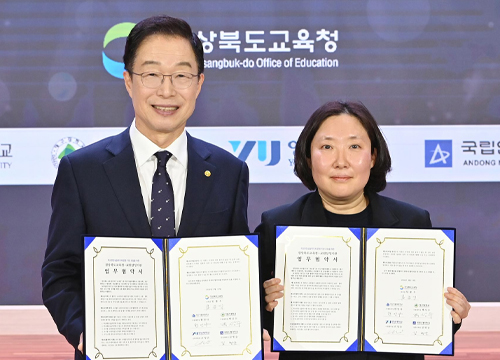
Establishing a Cooperative System to Strengthen Prospective Teachers' Capacity Providing Practical Experience in Curriculum, Teaching, Assessment, and Life Guidance Exploring Measures to Cultivate Talents Suitable for School Sites through Collaboration between Local Universities and Education Offices [March 21, 2024] <From the left, LIM Jong-sik, Superintendent of Gyeongsangbuk-do Office of Education, CHO Sung-eun, Dean of YU College of Education> YU (President CHOI Oe-chool) and the Gyeongsangbuk-do Office of Education (Superintendent LIM Jong-sik) have signed a business agreement to create a foundation for the operation of a mutually cooperative School Field Practice Semester System. The agreement ceremony, held at the Gyeongsangbuk-do Office of Education on the 19th, was attended by Dean CHO Sung-eun of YU's College of Education, as well as officials from Andong National University, Daegu Catholic University, Daegu University, and the Gyeongsangbuk-do Office of Education. Through the agreement, the five organizations agreed to cooperate on ▲ reorganizing the curriculum to apply the school field semester system ▲ supporting participating students ▲ 'collaborating with Office of Education and teacher training institutions' and 'researching and operating a localized operation model and council' ▲ and supporting satisfaction surveys for monitoring the pilot operation sites. The School Field Practice Semester System is a teacher training curriculum that allows prospective teachers to experience various practical tasks such as curriculum, teaching, assessment, life guidance, and counseling for one semester separately from the existing four-week teaching practice to further strengthen their competence in the school field, aiming to be fully implemented in 2028. In the second semester of the 2023 academic year, three students from YU's College of Education and Graduate School of Education participated in the pilot project of the ‘School Field Practice Semester for Preparatory Teachers’ held at Gyeongsan Sadong Middle School (Principal YEO Sung-dong) for 15 weeks, using the university's own budget for the first time in Gyeongsangbuk-do, to strengthen the school field capabilities of pre-service teachers. In the first semester of 2024, three fourth-year students from the Department of English Education and the Department of Mathematics Education at the College of Education are participating in the 'School Field Practice Semester for Preparatory Teachers' at Gyeongsan Girls' Middle School (Principal CHOI Bo-yong) with the support of the Ministry of Education. They spend three days of the week practicing supporting various educational activities at Gyeongsan Girls' Middle School, and the remaining two days at the university for curriculum and theory classes. Professor CHO Sung-eun, Dean of YU's College of Education and Dean of the Graduate School of Education, and Chairman of the National Council of Presidents of Private Colleges and Universities, said, "College of Education and Graduate School of Education are facing a period of change in terms of decreasing enrollment resources and improving the teacher training system. YU's College of Education and Graduate School of Education will do its best to foster human resources with transformative capabilities suitable for school sites."
- PR team
- 2024. 04. 11
- 2024. 03. 21
- 1048
-
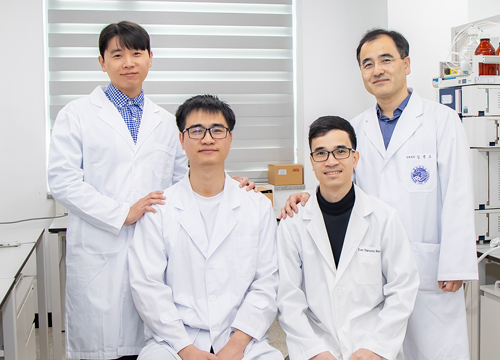
Research results published in the internationally renowned journal 'ACS Nano (IF=17.1)' Demonstrated therapeutic potential in an animal model of non-small cell lung cancer (NSCLC) [April 5, 2024] <From the left, Professor KIM Jung-Hwan, Le Ngoc Duy (first author of ACS Nano), Nguyen Bao Loc (first author of Nano Today), and Professor KIM Jong-Oh> A research team led by Professors KIM Jong-oh and KIM Jung-hwan at YU(President CHOI Oe-chool)'s College of Pharmacy has developed a messenger ribonucleic acid (mRNA)-based nanomedicine that can effectively block angiogenesis in lung cancer. The team developed a treatment that blocks vascular endothelial growth factor (VEGF) in tumors. VEGF is a substance secreted by cells that stimulates the production of new blood vessels, and cancer cells require rapid blood vessel formation around them to grow rapidly. Blocking VEGF reduces blood vessel formation around cancer cells, which can stop cancer cells from proliferating. The research led to the development of mRNA nanomedicines by synthesizing VEGF-blocking antibodies into encoded mRNA and putting them into nanocarriers that can be delivered directly to lung endothelial cells using biocompatible polymers and lipids. Proteomics studies also revealed how the nanocarriers reach the lungs. In fact, in a mouse model of non-small cell lung cancer, this method showed superior tumor proliferation inhibition and angiogenesis inhibition compared to existing protein-based antibody therapies. Professor KIM Jong-oh said, "The results of this study support the therapeutic potential and clinical benefits of nanoparticle-mediated mRNA therapies in anti-cancer antibody therapy, and we expect that the research on nanoparticle-based mRNA anticancer therapeutics will be utilized in various mRNA anticancer vaccines and therapeutics in the future." Meanwhile, the research was supported by the Basic Research Program of the National Research Foundation of Korea (mid-career researchers and leading research center support project). The results were published in ACS Nano (Impact factor 17.1, Paper title: Antiangiogenic Therapeutic mRNA Delivery Using Lung-Selective Polymeric Nanomedicine for Lung Cancer Treatment, ACS Nano, 18, 8392-8410), an internationally recognized journal published by the American Chemical Society. In addition, the team recently published a study in the internationally renowned journal Nano Today (Impact factor 17.4, Paper title: Reigniting the cancer-immunity cycle with nanoparticles for simultaneous delivery of oncolytic peptides and a TLR agonist, Nano Today, 55, 102179, 2024) showing that nanoparticles that can simultaneously deliver an oncolytic peptide and a Toll-like receptor (TLR) agonist to cancer cells can trigger synergistic effects in anticancer therapy and improve survival rates.
- PR team
- 2024. 04. 11
- 2024. 04. 05
- 1090
-
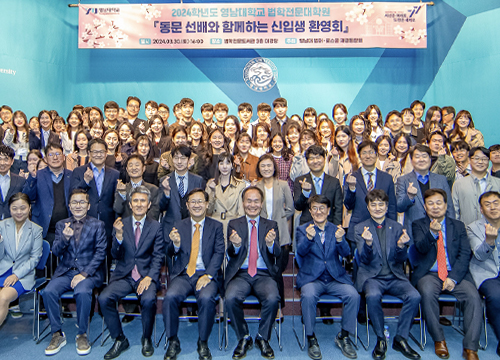
Gathering to Cheer on the 77 New Students of the 16th Law School Class of 2024 100 Participants Including College of Law, Law School Alumni Association, Current Students, and New Students Donation of KRW 30 Million to Development Fund and Conversations with Seniors [April 4, 2024] <Alumni of the Seoul Alumni Association of YU College of Law and Law School, current students, and new students gathered to hold a 'New Student Welcome Party with Alumni Seniors'>. Graduates of YU's (President CHOI Oe-chool) College of Law and Law School visited the campus on the afternoon of the 30th of last month. Attorney SEO Young-deuk, Chairman of the YU College of Law and Law School Seoul Alumni Association, NA Chae-beom, CEO of Hanwha Insurance Company, and JUNG Jae-gon, Head of the Dispute Mediation Division of the Korea Copyright Commission, visited their alma mater by hosting the 'New Student Welcome Party with Alumni Seniors' to cheer on the new start of the 2024 freshman class of YU Law School (President LEE Dong-hyung, hereinafter referred to as the Law School). At the event, more than 100 people, including 70 freshmen students of the 2024 law school class, members of the College of Law and Law School Seoul Alumni Association, law school faculty, staff, and students, filled the Law Library Auditorium, and the College of Law and Law School Seoul Alumni Association donated 30 million won to the development fund for the alma mater and its juniors. <YU College of Law and Law School Seoul Alumni Association donated 30 million won to the development fund for the alma mater and its juniors> (From the left, Chairman SEO Young-deuk of the College of Law and Law School Seoul Alumni Association, Dean LEE Dong-hyung of the Graduate School of Law, and President CHOI Oe-chool) Chairman SEO Young-deuk said, "I am delighted to host this meaningful event to support and encourage the start of our juniors who have entered the Law School.” He continued, “The Seoul alumni gathered our love for alma mater and juniors and donated a development fund. We congratulate the new students on your admission and hope that you grow into excellent legal professionals.” At this event, seniors introduced various experiences to juniors and also had time to receive and answer questions from juniors. Freshman representative JUNG Ji-yoo (16th class of law school) said, "I am thankful to the seniors who have made this gathering possible. Meeting and listening to stories directly from seniors who are actively engaged in various sectors of society makes me feel reassured. I will strive hard to follow the footsteps of these excellent seniors." In congratulatory remarks, President CHOI said, "The law school, which has been performing excellently year after year, such as ranking first in the nation in the pass rate of the bar examination for new prosecutors in 2024, is a great pride of our school," adding "We are grateful to the alumni who are raising the status of YU in various fields of society, and we will spare no effort to foster lawyers who contribute to human society beyond the country."
- PR team
- 2024. 04. 11
- 2024. 04. 04
- 823
-
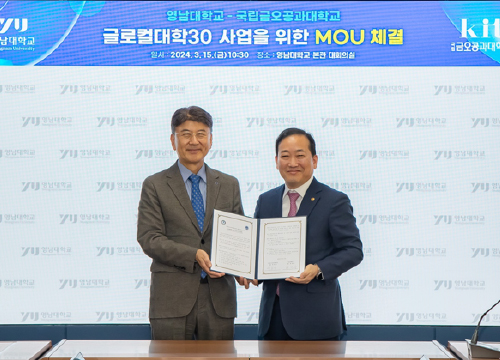
Mutual development agreement between the two universities Establishment of foundations for the Glocal University 30 Project Exploration of ways to foster glocal talents through cooperation between leading universities in the region [March 15, 2024] <From left: President CHOI Oe-chool of YU, President KWAK Ho-sang of the Kumoh National Institute of Technology> YU (President CHOI Oe-chool) and the Kumoh National Institute of Technology (President KWAK Ho-sang), have signed a memorandum of understanding and taken the first step towards implementing the Glocal University 30 Project. Officials from both universities attended the agreement ceremony, which took place in the conference room on the 3rd floor of the main building of YU on the morning of the 15th. The attendees were as follows: CHOI Oe-chool (President of YU), PARK Seung-woo (Director of the Department of Education and Innovation), LEE Gyeong-soo (Director of the Department of Industry-Academic Research), BAE Cheol-ho (Head of the Glocal University Promotion Team), KWAK Ho-sang (President of Kumoh National Institute of Technology), JOO Baek-seok (Dean of Planning and Cooperation), KIM Jong-bok(Dean of Academic Affairs), AHN Dong-jun (Dean of the Office of Student Success), and others. According to the agreement, the two universities aim to collaborate on ▲establishing systems for fostering regional strategic industries ▲developing AI-based advanced education platforms ▲conducting advanced industry-academia cooperation research and operating education programs ▲establishing and strengthening cooperation networks for creating youth employment opportunities ▲developing and operating regional and global contribution projects. <YU signed a business agreement with Kumoh National Institute of Technology to promote the Glocal University 30 project.> (From the sixth person from the left: President CHOI Oe-chool of YU, President KWAK Ho-sang of Kumoh National Institute of Technology) President KWAK Ho-sang of Kumoh National Institute of Technology said, "Kumoh National Institute of Technology as the only national university specializing in engineering, and YU, the top private university in the non-capital region, have broken down their barriers and gathered their strengths to embark on a bold challenge to become a hub for youth and professionals, as well as to leap to a world-renowned institution," adding, "Through strong solidarity between national and private universities, we will enhance the public responsibility of universities, go beyond overcoming crises faced by regions and universities, and create a pioneering university innovation model leading the future of regional industries in the era of digital transformation, thus becoming the vanguard of first-class university innovation in Korea." President CHOI Oe-chool of Yeungnam University remarked, "Today, Yeungnam University, located in Gyeongsan, the largest educational city in southern Gyeongsangbuk-do, and Kumoh National Institute of Technology, a specialized university leading the fourth industrial revolution in electronic, semiconductor, and defense industries, situated in Gumi, the central city of Gyeongsangbuk-do, have gathered significant aspirations for the challenge of becoming a glocal university." He added, "Based on the collaboration between the two universities, we will foster glocal talents capable of driving specialized regional industries and lead regional development and innovation," and said, "Taking the Glocal University 30 Project as an opportunity, we will utilize the strengths and competitiveness of the two universities to enhance the capabilities of youth, revitalize the regional economy through advanced national and regional industry upgrading, and contribute to glocal prosperity, creating a successful model of a glocal university."
- PR team
- 2024. 03. 27
- 2024. 03. 15
- 1826
-
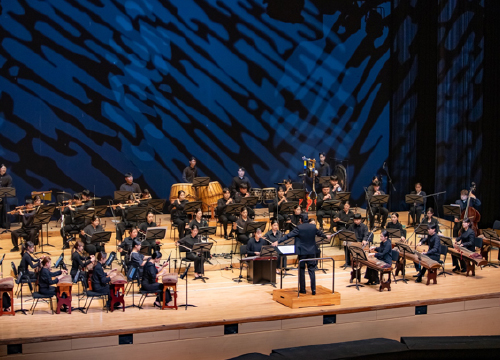
Selected as a contest project organized by the Arts Council Korea and received KRW 149 million in support Only Two Universities in the Nation Selected for 'Korean Classical Music' Major Provides on-the-job experience and opportunities for mutual growth through connections with local partner organizations [March 20, 2024] <Performance by students majoring in Korean Classical Music, Department of Music, Yeungnam University> YU (President CHOI Oe-chool) has been selected for the '2024 Field Connection Support Project for Prospective Artists,' organized by the Arts Council Korea, receiving a total of KRW 149 million in project funding. The 'Field Connection Support Project for Prospective Artists' aims to provide aspiring artists with experiences in various fields of cultural and artistic activities, including creation, performance, planning, production, technology, administration, and promotion, to enhance their adaptability to the field after graduation and to explore diverse career paths. The project began accepting applications in September last year, and a total of 30 applications were submitted, of which 14 were recognized for their project feasibility and ultimately selected. Only two universities, including YU, were selected for the theme of Korean classical music. The Korean Classical Music major in the Department of Music at YU's College of Arts plans to provide practical education and experience necessary for career selection and employment by linking the curriculum with local partner organizations such as the Gyeongbuk Art & Culture Foundation and the Miryang Culture & Tourism Foundation under the theme of the 'YU-Yein Road Project(藝人道)'. The project was selected in recognition of the achievements of youth international exchange projects such as the Korea-India Art Road, the Gyeongbuk-Vietnam Cultural Exchange Project conducted in 2023, and the Miryang Arirang X YU Korean Classical Music Camp with the Miryang Culture & Tourism Foundation. <Photo of the Korea-India Art Road, a collaborative project between YU's Korean Classical Music major and Gyeongbuk Art & Culture Foundation> Professor LEE Seung-hee, leading the project in the Department of Korean Classical Music, said, "We hope that this will be a great opportunity for students to gain practical experience in the field through local content production and collaboration with regional cultural and arts organizations, and that universities and local cultural and arts organizations can create and share regional cultural values together."
- PR team
- 2024. 03. 27
- 2024. 03. 20
- 1648
-
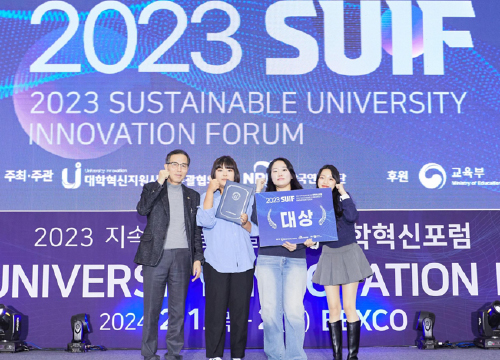
LEE Jae-kyung, JUNG Ji-woon and KIM Sung-eun, 3rd grade in the Department of Human Services Awarded the 'Grand Prize' in the Student Review Video Contest for University Innovation Support Project Contains achievements from various extracurricular programs operated by the YU Educational Development Center [March 11, 2024] <From the second person from the left: LEE Jae-kyung, JUNG Ji-woon and KIM Sung-eun> YU (President CHOI Oe-chool) students have won the 'Grand Prize' at a national-level competition. At the 'University Innovation Case Video Contest' held at BEXCO in Busan on February 2nd, the team 'Powerpuff Girls', composed of LEE Jae-kyung, JUNG Ji-woon and KIM Sung-eun from the Department of Human Services won the grand prize. The contest, sponsored by the Ministry of Education and organized by the General Council of the University Innovation Support Project, received submissions from students at 117 universities participating in the National University Innovation Support Project. For the eight universities (teams) that passed the first and second rounds of judging, the final presentation and third round of judging were held at the '2023 University Innovation Support Project Performance Forum' held on February 1 and 2, and the YU team was selected as the 'Grand Prize'. The submitted video from YU students included their experiences and achievements from various extracurricular programs operated by the YU Educational Development Center, such as the YU Can Do program for academic improvement, the departmental English promotional video competition, contests for exemplary cases of curriculum and extracurricular learning practices, and the learning portfolio competition. Representing the team, student LEE Jae-kyung said, "I have experienced a significant improvement in my grades through participation in the Educational Development Center's YU Can Do program. I plan to actively participate in various extracurricular programs on learning design methods and learning strategies provided by the YU Educational Development Center in the future, and actively promote them to my friends and juniors." The award-winning video is available on the YU Youtube channel (https://youtube/WhJhvzeR-J4). The YU Educational Development Center operates various programs to enhance students' learning capabilities and provide opportunities for exploring majors, including major-specific programs, basic major education, academic improvement programs, and tailored-level learning consultations. Additionally, it produces learning materials for distribution to students and discovers and shares excellent cases of learning strategies. Approximately 16,000 students participate annually, and their feedback is consistently incorporated into educational development efforts.
- PR team
- 2024. 03. 27
- 2024. 03. 11
- 1643